Laser Eye Surgery and Lens Implants – Correction of Refractive Errors
After a thorough evaluation of your individual situation, the most suitable method (laser or implant) will be selected based on the degree of refractive error, eye shape, anatomical parameters, and lifestyle factors.
Laser Eye Surgery. A New Quality of Life
Laser treatments are among the most frequently performed procedures on the human body, with the highest levels of safety and patient satisfaction.
The term “laser eye surgery” refers to ophthalmological surgical procedures for minimally invasive correction of refractive errors, performed using a laser that allows interventions to be carried out individually and precisely on the smallest scale.
Laser corrections have been performed for this purpose since the 1980s, and continuous technological and scientific progress has further perfected the precision and safety of these treatments. For example, the risk of complications from a properly performed laser treatment is many times lower than that of wearing contact lenses for years (infection, dry eyes, allergies).
There are different laser methods that enable you to enjoy life without glasses or contact lenses. What they all have in common is that the shape of the cornea is reshaped by the laser so that sharp vision becomes possible again.
The most important criteria for performing laser correction are:
- Age over 18 years
- Stable refractive error (change in refraction less than 1 diopter in the last 2 years)
- Nearsightedness (myopia) up to 8 diopters
- Astigmatism up to 4 diopters
- Farsightedness (hyperopia) up to 4 diopters
- Presbyopia up to 1.5 diopters
- Normal corneal thickness
- Healthy eyes
The most important and current laser eye surgery procedures are the following:
Dr. med. Myron Kynigopoulos
Femto-LASIK (Laser In Situ Keratomileusis)
Femto-LASIK is the most commonly performed laser treatment and lifestyle procedure, with the highest patient satisfaction.
Under local anaesthesia, a thin lamella, approx. 0.1 mm thick (flap), is first prepared on the surface of the cornea using the femtosecond laser. This takes approx. 25 seconds. The eye is kept open with an eyelid speculum (you cannot close the eye).
The flap is then folded back; it cannot be completely removed because, for safety, a tissue bridge is left at the upper edge of the cornea (hinge).
The treatment is now performed on the cornea without contact. This gives the cornea its corrected shape (slightly thinner and flatter in myopia treatment). Duration between 2-20 seconds depending on the correction. You will fixate on a light. The smallest eye movements are compensated by the LASER (active eye tracker, 1,050 times per second), so treatment cannot occur at an unintended spot on the cornea and an optimal result is achieved.
The flap is then folded back to its original position and lubricating and antibiotic eye drops are administered.
Immediately after the laser treatment, you will see much better than before and can expect clear vision within the first day.
Duration: 5 minutes per eye
Advantages:
• Correction of myopia, hyperopia, astigmatism, presbyopia
• Pain: only slight burning sensation in the first 2-4 hours
• Work incapacity: 1 day
• Sports restriction: 1 week, contact and ball sports 1 month
• Visual rehabilitation: in 4-12 hours
• Treatment of both eyes on the same day
Disadvantages:
• Technically more complex
• More expensive, 2 LASERS in use
• Dry eyes in the first months
Price: CHF 2,290 per eye
(Preliminary examinations, follow-up checks and medications, 24/7 availability for the first 3 months, re-treatment with laser if medically indicated within 10 years included)

Correction of Refractive Errors
Trans-PRK (Transepithelial Photorefractive Keratectomy)
With trans-PRK (also called SmartSight), the correction is performed on the surface of the cornea under local anesthesia and after a lid speculum holds the eye open, without contact and without incisions. The epithelium (the cells of the corneal surface that constantly regenerate) is also automatically removed by the LASER. Previously, these were manually removed by the surgeon (PRK method).
At the end, antibiotic eye drops are applied and a contact lens is placed on the cornea, which remains until the epithelium regenerates and is removed by the doctor after approximately 4 days. The contact lens reduces the expected pain.
Duration: 1 minute per eye
Advantages:
• No incision (flap) required
• Sports restriction: 5 days, contact and ball sports 2 weeks
• Technically simpler method, contact-free
• Price, only 1 laser used
• Treatment of both eyes on the same day
Disadvantages:
• Pain: 2-3 days, occasionally severe pain expected
• Work incapacity: 1 week
• Visual rehabilitation: in 5-7 days, optimal result expected only after 1-3 months
• Dry eyes in the first months
Price: CHF 1,890 per eye
(Pre-examinations, follow-up checks and medications, 24/7 availability for the first 3 months, re-treatment within 10 years if medically indicated included)
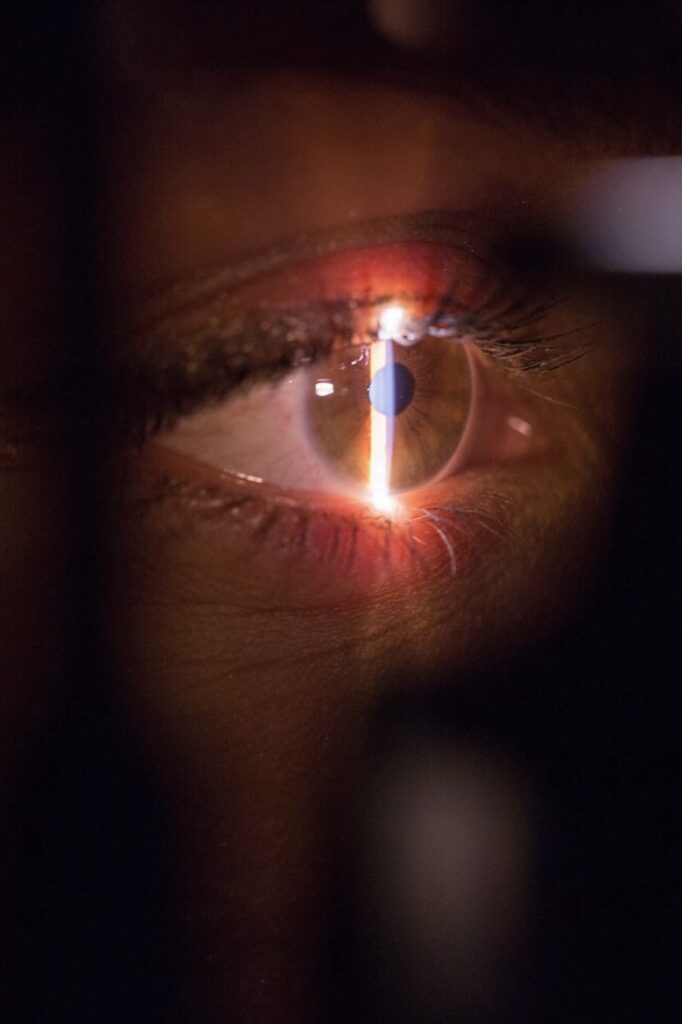
Laser Treatment with the Highest Standards
Intraocular lens implants: correction of higher refractive errors
Correction of refractive errors is also possible very precisely with the implantation of artificial lenses in the eye, in addition to the natural lens (phakic lenses), besides LASER treatments.
These treatments have been performed for 30 years and have been carried out several million times. The worldwide trend toward implantation is constantly increasing.
Indications:
- Higher refractive errors
- Also for small corrections when the cornea is too thin for LASER treatment
- Nearsightedness (myopia): up to 20 diopters
- Farsightedness (hyperopia): up to 10 diopters
- Astigmatism: up to 6 diopters
- Presbyopia: up to 2 diopters
- Also for dry eyes or corneal irregularities
- Age under 60 years
Under local anesthesia and under sterile conditions, the artificial lens is implanted into the eye through a small incision (under 3mm) at the edge of the cornea, behind the pupil, in front of the natural lens, and positioned. No removal of tissue necessary.
The eye is rinsed and antibiotic eye drops are applied to the eye.
Duration: 3–5 minutes per eye
Advantages:
- Visual rehabilitation: after 1 day most patients achieve full visual acuity
- No tissue is removed from the eye, reversible
- No pain
- Does not induce dry eyes
- Sports restriction: 1 week, contact and ball sports 1 month
- Technically simple method
- Treatment of both eyes on the same day possible
- Work incapacity: 2-3 days
Disadvantages:
- Treatment inside the eye
- Price
Price: CHF 4,390 per eye
Variant: CHF 4,890 per eye if astigmatism is also present
We only implant original artificial lenses from Staar Surgical@ from USA
(Preliminary examinations, follow-up checks and medications, 24/7 availability for the first 3 months, re-correction with LASER if medically indicated within 10 years included)
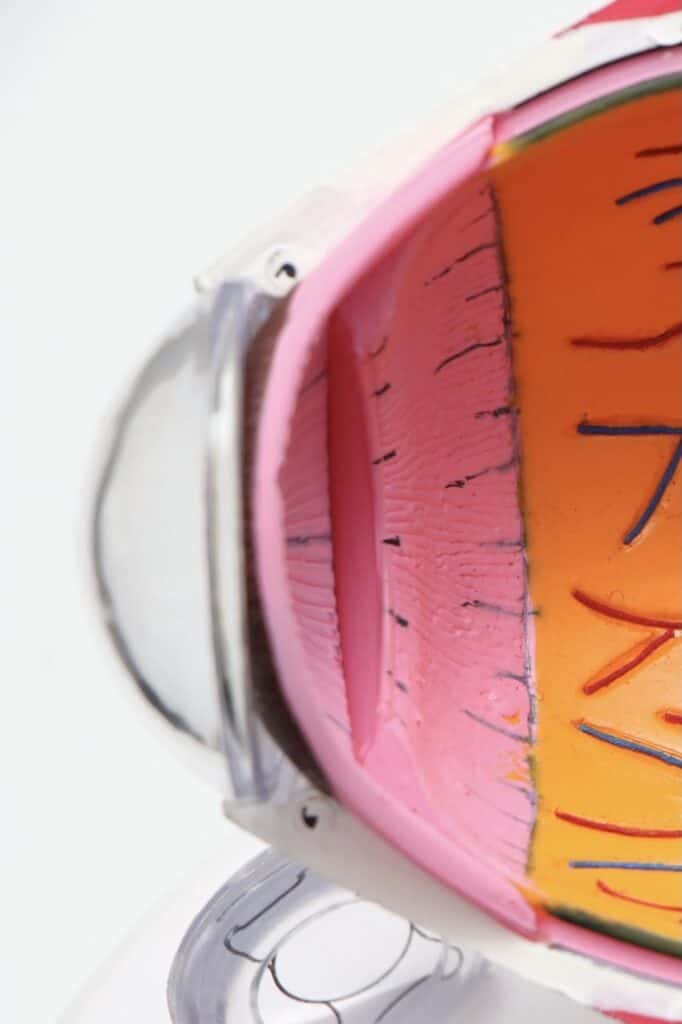
Laser Treatment with the Highest Standards
Laser Procedures for Nearsightedness and Farsightedness
There is a vast range of eye laser procedures that differ to varying degrees. These can be divided into two main groups: superficial and deep procedures. The main difference lies in the approach and the target tissue layer. The most important and current procedures are the following: